Choose by installation clearance and approved tank geometry.
OEM water-heater components
Magnesium Anode Rods for Water Heaters
Straight, flexible and metric-stud assemblies configured to your tank drawing. Body diameter, active length, internal core and connection interface are confirmed before production.
For a useful quotation, send: diameter × active length × complete connection or thread × quantity × destination.
Straight & flexibleNPT, G, R & metric interfacesDrawing-controlled supply
NPT, G, R and metric connections are stated explicitly.
Dimensions, tolerances and inspection scope are confirmed before supply.
Choose the configuration
Start with the installation interface
Tank volume alone does not define the correct anode. Select the construction closest to your application, then confirm the complete dimensions and connection before order release.
Straight / sufficient top access
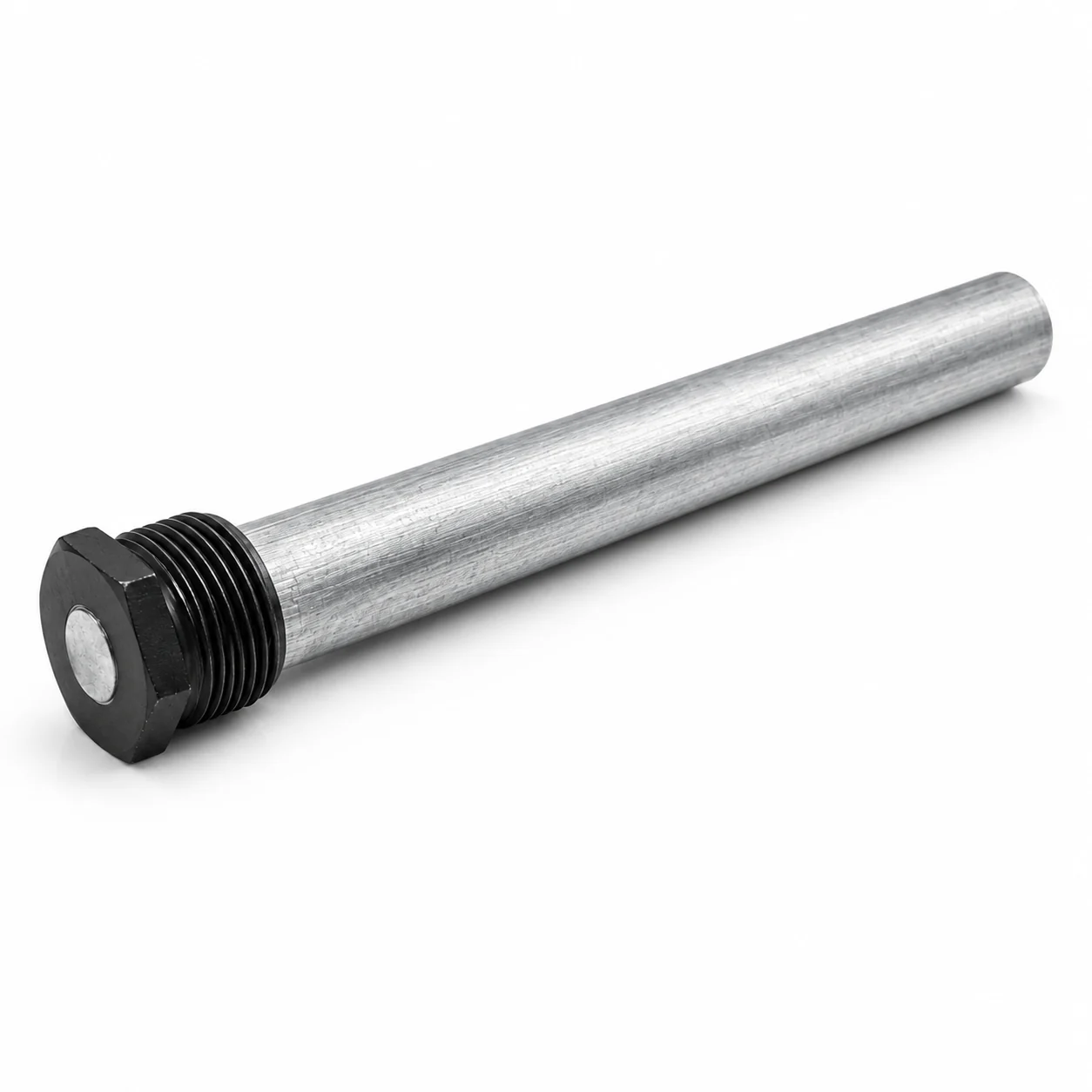
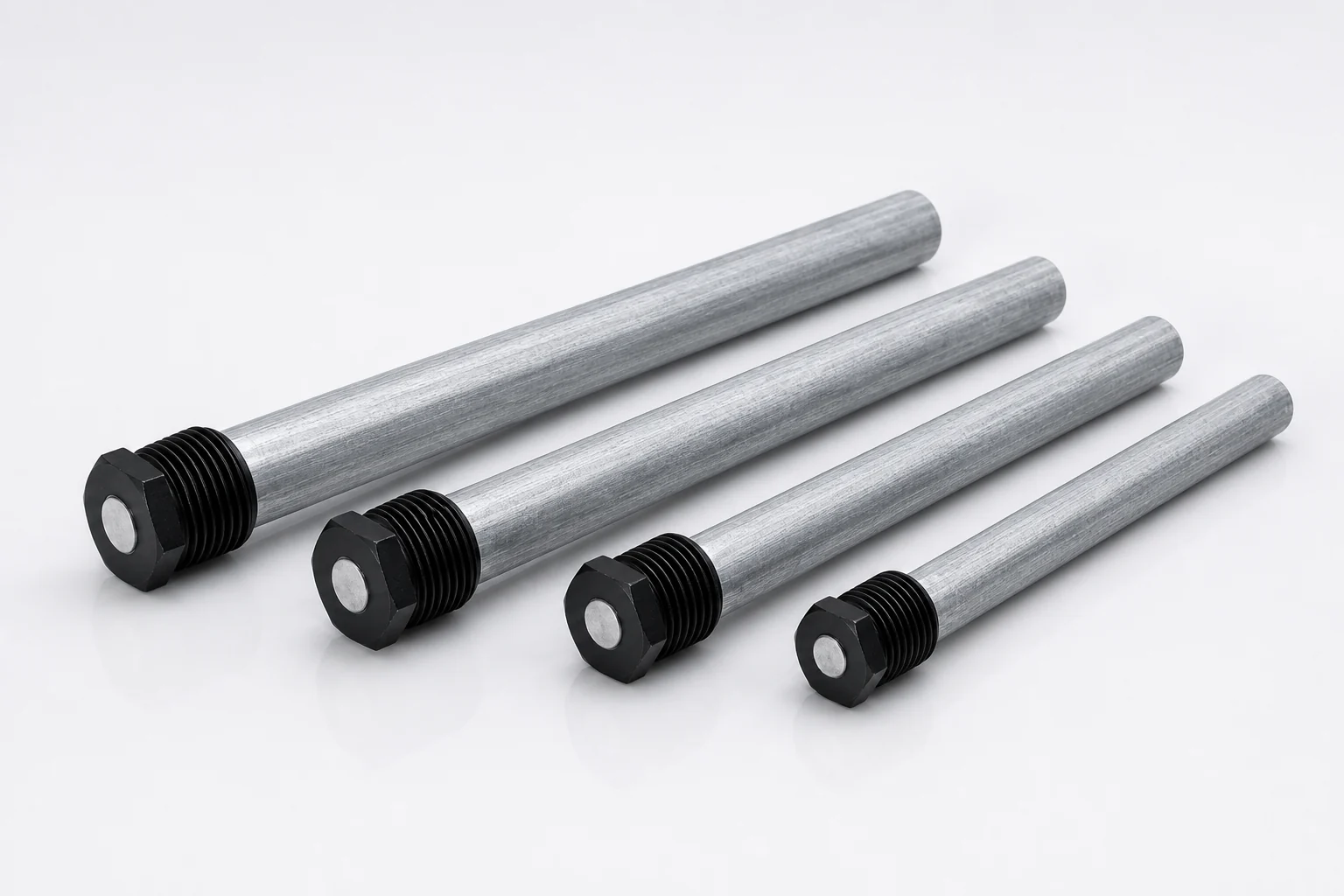
Straight Hex-Plug Rod
Magnesium-body diameter, active length, plug geometry and thread are released together as one controlled configuration.
Flexible / restricted clearance
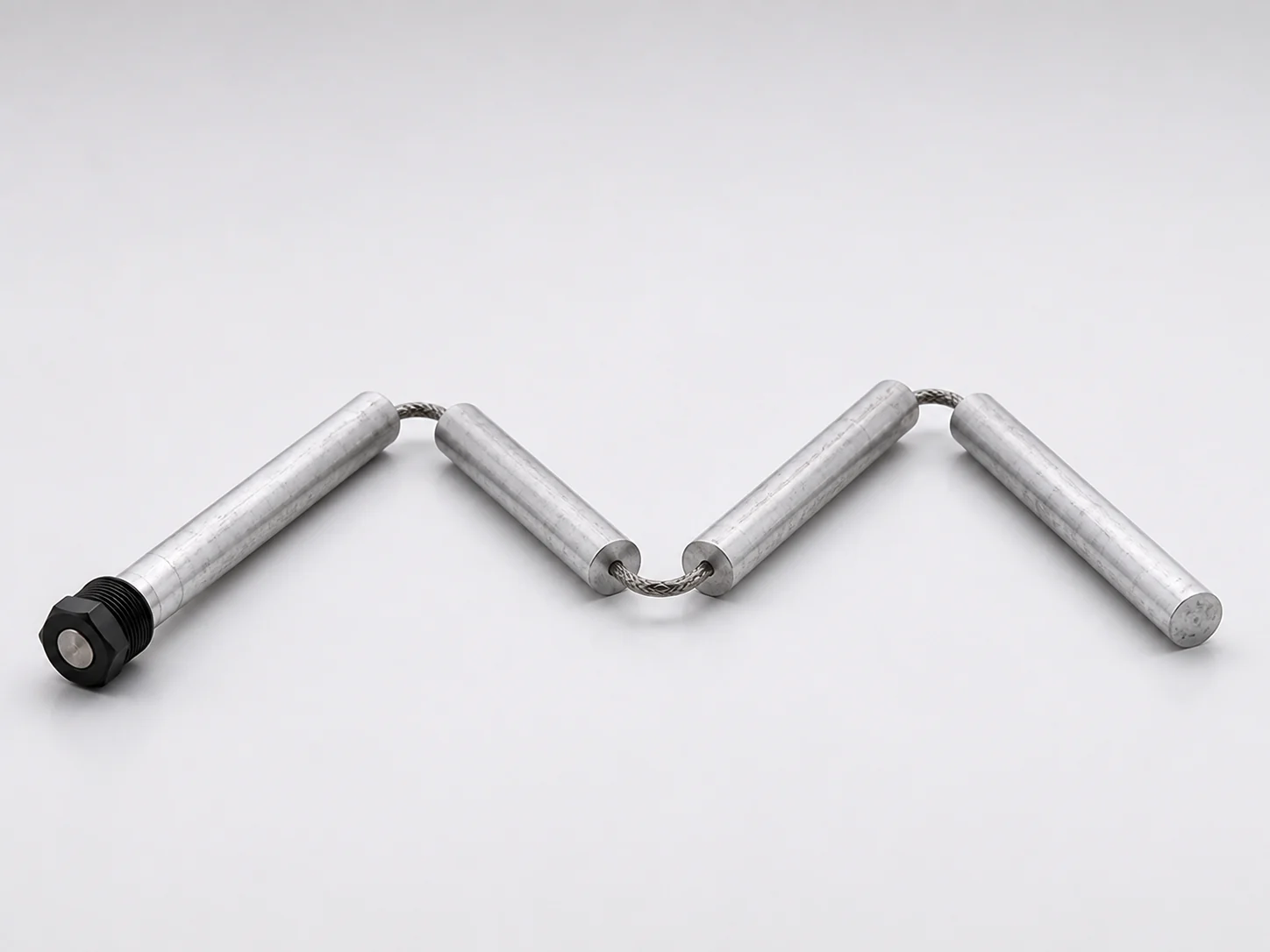
Flexible Segmented Rod
Segment count, cable joints, bending path and installed length are defined by the approved drawing for the tank and service space.
Metric / plug-mounted OEM
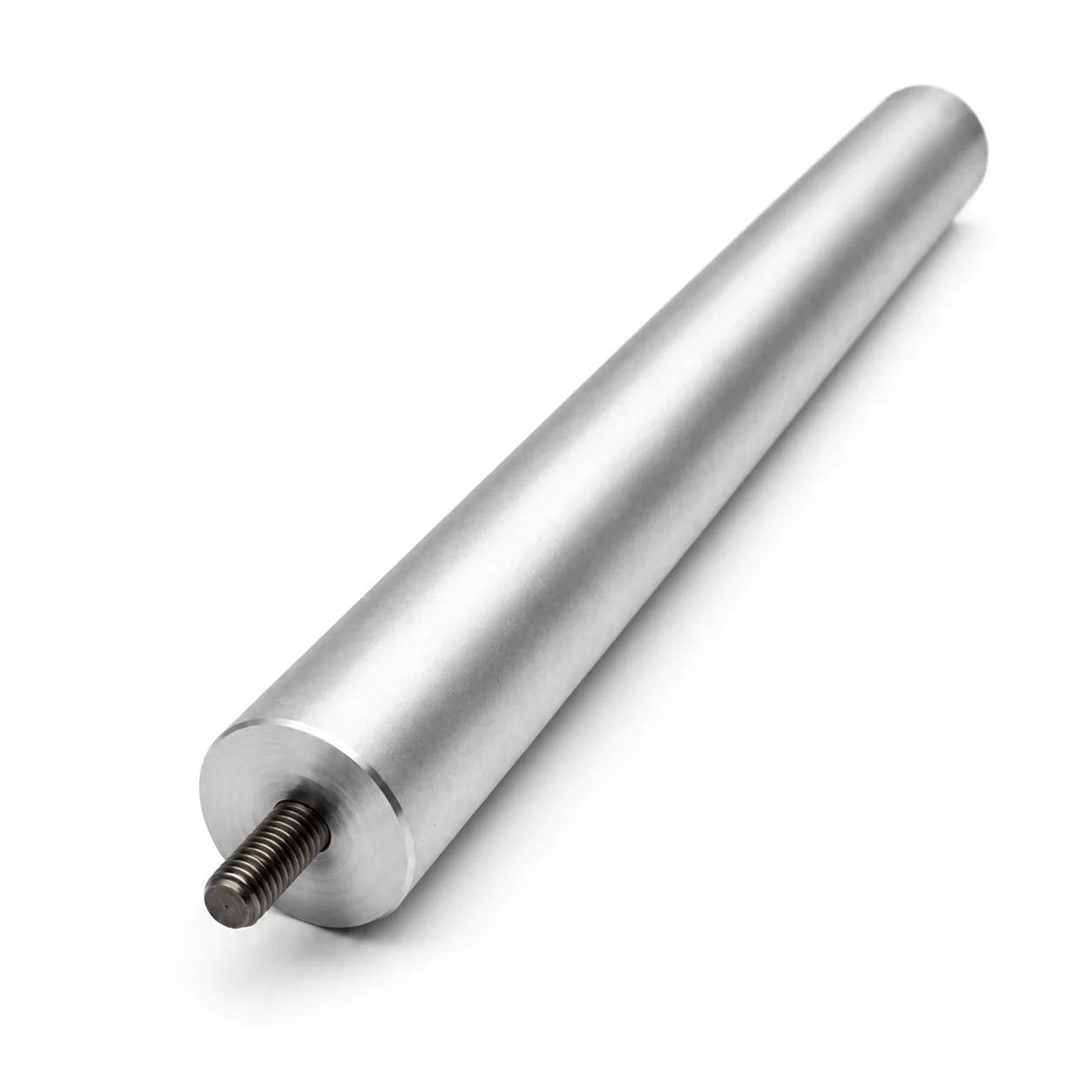
Metric Stud or Plug-Mounted Rod
Stud exposure, thread system and mounting geometry are stated explicitly for European and other OEM systems.
Product visualizations show representative configurations. Final product identity, dimensions and acceptance are governed by the approved SKU drawing and order documents.
Market-reference families
Dimensions and connections for quotation
International standards do not prescribe one universal water-heater anode diameter, length or connection. The combinations below are reference families only.
North American reference
Hex-plug and segmented families
Typical market configurations used to begin an OEM or replacement-program review.
| Construction | Body diameter | Reference active length | Connection |
|---|---|---|---|
| Straight hex-plug | Ø0.750 in / 19.1 mm | 44 in typical | 3/4-14 NPT |
| Straight hex-plug | Ø0.840 in / 21.3 mm | 9, 16, 32 or 44 in | 3/4-14 NPT |
| Straight hex-plug | Ø0.900 in / 22.9 mm | OEM-specific | 3/4-14 NPT |
| Flexible segmented | Ø0.840 in / 21.3 mm | 44 or 48 in reference | 3/4-14 NPT |
| Custom OEM | Ø0.500–1.050 in reference | Per drawing | NPT or defined outlet interface |
European / international reference
Metric, G/R and flexible families
Reference geometry families; the complete thread and sealing definition remains mandatory.
| Construction | Reference diameter | Connection |
|---|---|---|
| Metric-stud rod | Ø18 / 21.3 / 26 / 33 mm | M6 or M8, exposed length stated |
| Plug-mounted rod | Ø21.3 / 26 / 33 mm | G3/4, G1 or G1¼ per ISO 228-1 |
| Thread-sealing plug | Per drawing | R thread per ISO 7-1 |
| Flexible / chain | Ø22 or Ø33 mm segments | M8 or defined plug interface |
| Long extruded rod | Ø21.3 / 26 / 33 mm | Socket, stud or extended core wire |
Quotation reference—not a universal compatibility list. Confirm the appliance model, tank drawing, sealing face and complete connection geometry before ordering. Final dimensions, tolerances and availability are governed by the approved SKU drawing.
Control the interface
A matching nominal size is not enough
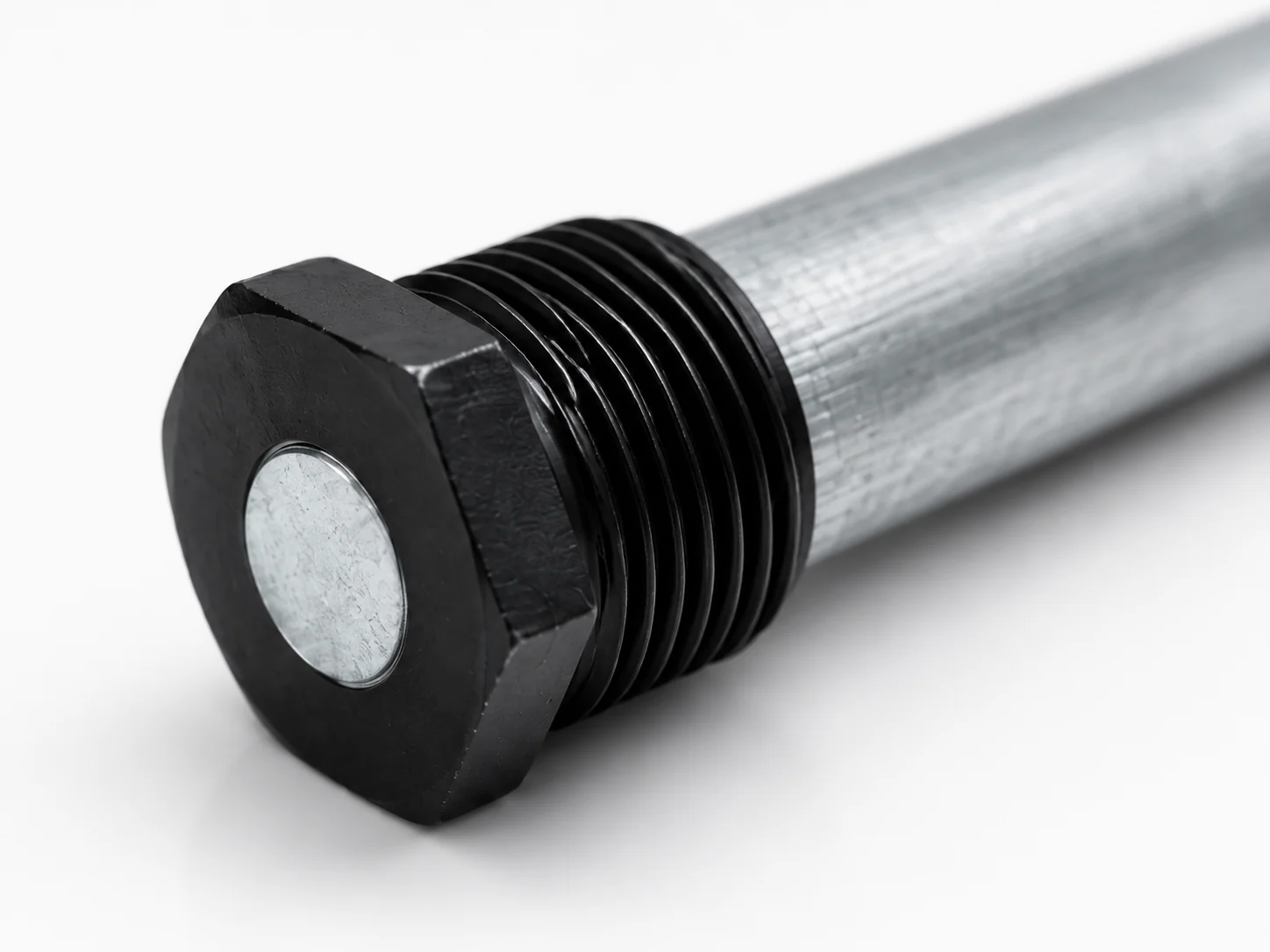
3/4-14 NPT, G 3/4 and R 3/4 use different thread and sealing systems and must not be treated as interchangeable. A complete anode definition includes more than the nominal thread size.
- Thread standard, size, gender and gauge acceptance
- Hex across flats and plug height
- Thread engagement and sealing-face geometry
- Plug material and coating
- Sealing method and assembly torque
- Installed length from the sealing face
- Rod-to-cap connection and electrical continuity
- Leak or pressure test where specified
Not sure which connection you have? Send a clear photo of the existing plug, the tank model and measured dimensions. We will identify the open technical points before quotation. Final fit remains subject to drawing approval.
From requirement to release
Get a technically usable quotation
A useful RFQ starts with the evidence you already have. Unknown items can be isolated before a price or sample is released.
Send the evidence
An approved drawing, a measured existing part, or clear photos with the appliance brand and model.
Close the open points
Construction, dimensions, connection, quantity, destination and inspection-document scope.
Release the configuration
Supply controlled against the approved drawing revision and confirmed commercial order scope.
No drawing yet? Start with: product type + body diameter + active length + connection + quantity + destination.
Drawing-controlled supply
What is defined before production
A correct alloy is only one part of the finished assembly. Geometry, electrical path, pressure-boundary interface and records are controlled together.
Active magnesium geometry
Body diameter, active length, installed length, minimum net active mass and surface condition.
Core and electrical path
Core material and diameter, concentricity, terminal connection and continuous electrical path.
Pressure-boundary interface
Plug geometry, thread callout, sealing method, torque criteria and any specified leak or pressure test.
Order documentation
Drawing revision, heat or batch identity, quantity, marking, packing and agreed inspection records.
Standards by scope
Material, system and thread references are not interchangeable
The standard named on an RFQ should match the product feature it actually controls. None creates one universal finished water-heater anode size.
| Reference | Permitted use on the specification | Boundary |
|---|---|---|
| ASTM B843-18(2025)Material | Cast and extruded magnesium-anode material requirements. | Prescriptive, not performance-based; finished dimensions and hot-water service life are not established. |
| EN 12438:2017Cast material | Alloy grades, chemistry and specified tests for cast anodes. | Does not provide full-product conformity for an extruded rod or define its thread and dimensions. |
| ISO 26202:2019Cast material | Magnesium-alloy ingots and cast anodes. | Not a water-heater sizing, connector or service-life standard. |
| DIN 4753-3:2025-12Tank system | Enamelled drinking-water tank and cathodic-protection system requirements and testing. | A system design and validation reference, not a standalone finished-anode certificate. |
| ASME B1.20.1NPT thread | NPT thread dimensions and gauging when specified. | Does not establish the plug assembly's pressure rating or sealing performance. |
| ISO 228-1 / ISO 7-1Pipe threads | G parallel thread and R/Rp/Rc pipe-thread systems. | Exact designation and sealing method must be stated; these interfaces are not interchangeable. |
Certification boundary: no blanket CE, NSF/ANSI/CAN 61, WRAS, ACS, UBA, AS/NZS 4020 or other potable-water approval is claimed. Any required approval must be verified against the exact SKU, production facility, contact materials and intended use conditions before order.
Technical download
Review the engineering boundary before you specify
The four-page Data Sheet covers market-reference configuration families, source alloy chemistry, applicable standards, connection definitions, ordering information and available inspection records.
- North American and European reference families
- Material, tank-system and thread standard boundaries
- Complete ordering and inspection checklist
Magnesium Water Heater Anode Rods
Download Technical Data SheetDirect RFQ
Send your dimensions or drawing
Send the information you already have. Unknown fields can be clarified after the first technical review.
- Delivered directly to sales@cathprocp.com
- Attach drawings or product photos by email or WhatsApp
- Include diameter, active length, connection, quantity and destination
Choose how to contact us
Start with the dimensions you have.
No website form is needed. Send a short message, drawing or photo directly to sales.
Attach files in your email or WhatsApp message. If a dimension or connection is unknown, include clear photos and the water-heater model.
Buyer questions
Specify before you order
These answers separate product facts from tank-system decisions and unsupported compatibility assumptions.
What information is required for a quotation?
Send the product style, magnesium-body diameter, active length, installed or overall length, complete connection callout, quantity and destination. A released drawing is preferred. If no drawing is available, include the water-heater brand, model and clear photographs of the existing part.
Should I choose a straight or flexible anode rod?
A straight rod is normally considered where adequate top installation clearance is available. A segmented flexible rod can be considered where overhead clearance is restricted. The final segment layout and installed length must be confirmed by drawing.
Are 3/4-14 NPT, G 3/4 and R 3/4 interchangeable?
No. They use different thread and sealing systems. The exact designation, gauge requirement, sealing face and assembly method must be stated.
Can CathPro supply custom dimensions?
Drawing-controlled OEM configurations can be reviewed. Available dimensions, tolerances, tooling, quantity and inspection scope are confirmed during quotation and do not constitute a general stock commitment.
Which standards apply to these anodes?
Applicable references may include ASTM B843 for magnesium-anode material, EN 12438 or ISO 26202 for relevant cast forms, DIN 4753-3 for the enamelled tank protection system, and ASME B1.20.1, ISO 228-1 or ISO 7-1 for specified thread systems. No single standard defines a universal finished water-heater anode.
Is the product certified for potable-water use?
Potable-water suitability and regulatory documentation must be verified for the exact SKU, production facility, contact materials and destination market. No blanket approval should be assumed from a material or thread standard.
What inspection documents are available?
Depending on the agreed order scope, documents may include chemical analysis or MTC/CoA, dimensional inspection, electrical-continuity or assembly inspection, specified leak testing, packing records and Certificate of Conformity.
How long will a magnesium anode rod last?
Service life depends on active magnesium mass, tank condition, water chemistry, conductivity, temperature, usage and electrical continuity. Inspect and replace the anode according to the water-heater manufacturer's instructions; no universal service-life figure applies.
Send the dimensions you have. We will identify what is still missing.
Start with a drawing, a product photo or five basic details: diameter, active length, connection, quantity and destination.