Each item keeps its own technical basis and inspection status.
Project materials integration
Cathodic Protection Material Packages and MTO Supply
Cathodic protection material packages bring together anodes, reference electrodes, test stations, junction boxes, cables and connection accessories to match your project material list.
CathPro supplies coordinated material packages for pipeline, tank, marine and industrial CP systems against the project MTO and agreed documentation requirements.
Send your MTO, drawing or specification directly. No form required. Email: sales@cathprocp.com
Technical pageStandards mapped by scopeData fields stated explicitly
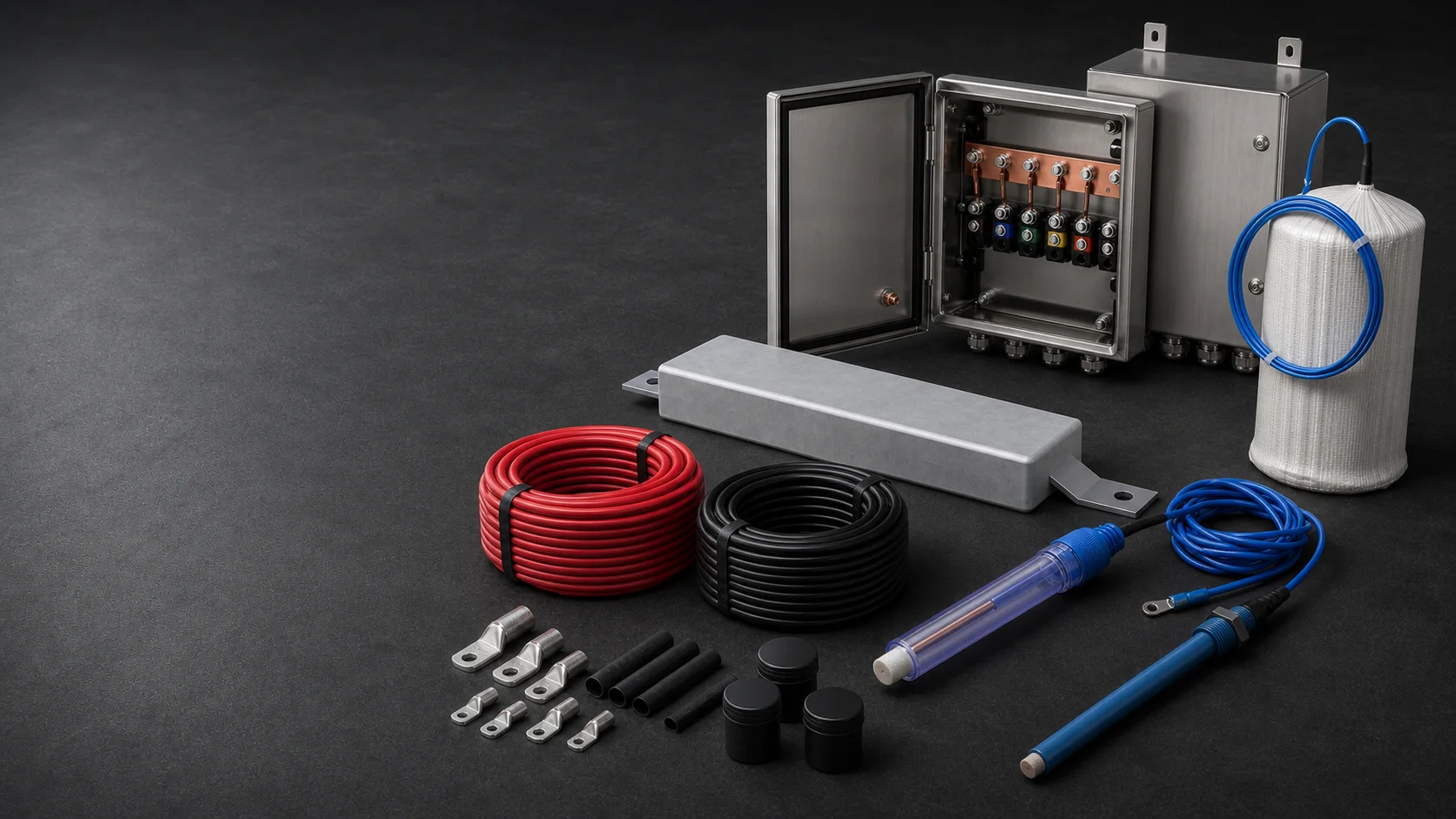
Cable, terminal, gland, splice and hardware compatibility is checked.
Drawings, reports and packing records remain traceable.
Product overview
Request a quote for your CP material list
Send your bill of quantities (BOQ) or material take-off (MTO), quantities, specifications and delivery destination for a coordinated supply quotation. The scope can include anodes, reference electrodes, test stations, junction boxes, cables and connection accessories; identify the required drawings, inspection documents and delivery date with your request.
- Primary function
- Coordinate complete or selected CP material scopes without losing item-level technical control.
- Typical scope
- Anodes, reference electrodes, test stations, boxes, cables, joints, connection hardware and accessories.
- Critical interfaces
- Cable/gland/terminal sizes, anode leads, station schedules, installation kits, tags and document references.
- Commercial discipline
- Any clarification, exclusion or proposed alternative remains visible against the affected MTO line.
Product construction
What the finished product contains
The package is structured around controlled data. A product is not treated as compliant because its name sounds similar; its description, interfaces and evidence must match the project basis.
MTO and requisition baseline
Original line number, description, unit, quantity and required delivery retained as the commercial and technical index.
Standards and drawing map
Each item linked to the applicable standard edition, datasheet, drawing and project specification clauses.
Compliance and clarification register
Compliant basis, deviations, missing information and proposed alternatives stated line by line.
Inspection and document plan
ITP activities, certificate/report requirements and vendor-data codes assigned to the responsible item.
Interface schedule
Cable, gland, terminal, connection, mounting and accessory compatibility reviewed across neighboring MTO lines.
Packing and traceability map
Project tags, package numbers, document references and final packing list tied back to item numbers.
Premium product studies
Products, configurations and critical interfaces
Premium product visualizations present the main component families in an integrated CP supply package. They illustrate scope organization; each delivered item is still released against its own standard, drawing, ITP and package identity.
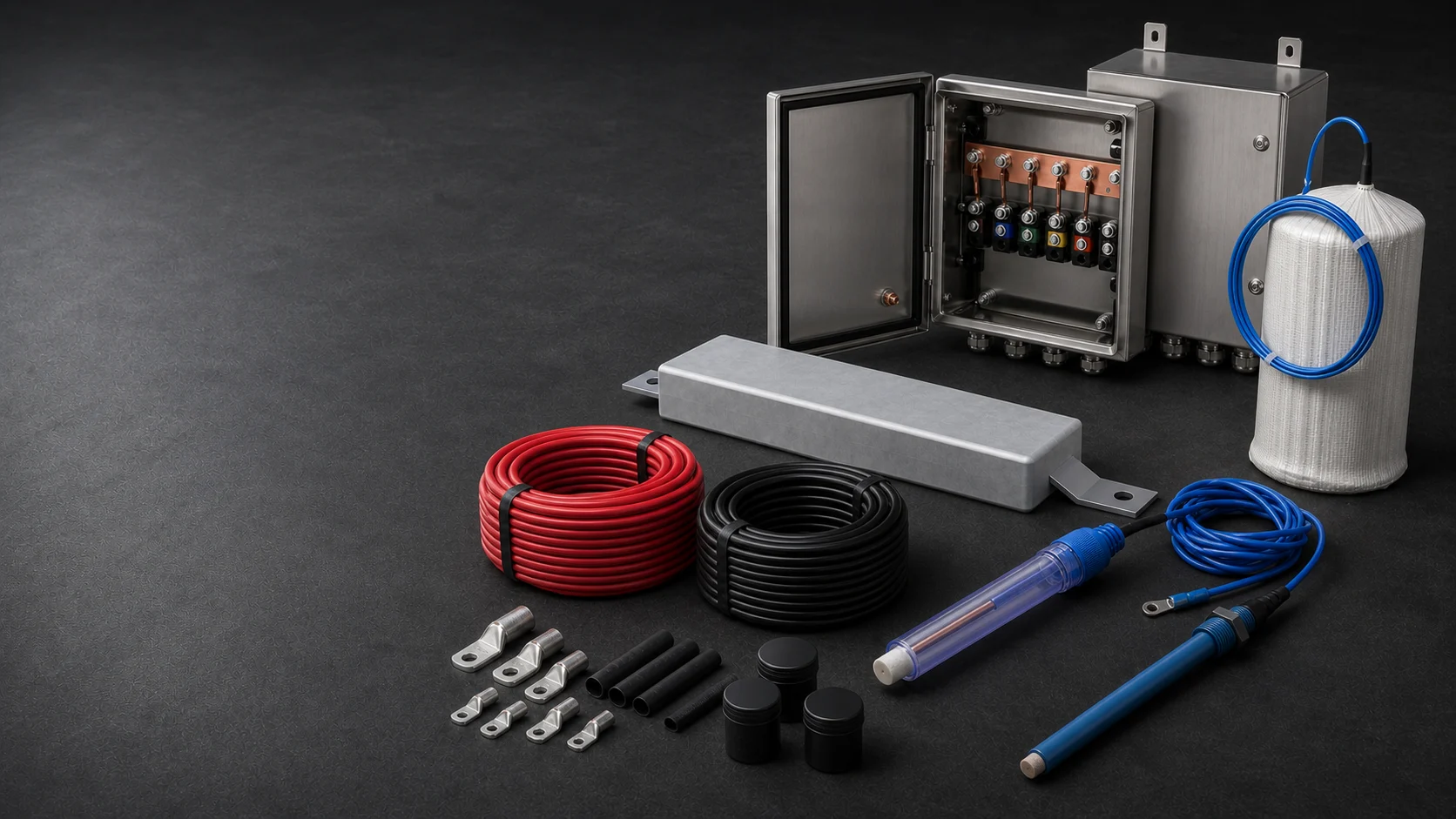
Major component families reviewed as one package
The MTO remains the index linking each physical item to its technical basis, inspection status and final documents.
Neighboring components checked for compatibility
Cable, gland, lug, terminal, anode lead and monitoring interfaces are cross-checked before order release.

Complete buried-service item
Alloy, core, cable, joint, backfill, bag and marking retain one approved assembly identity.
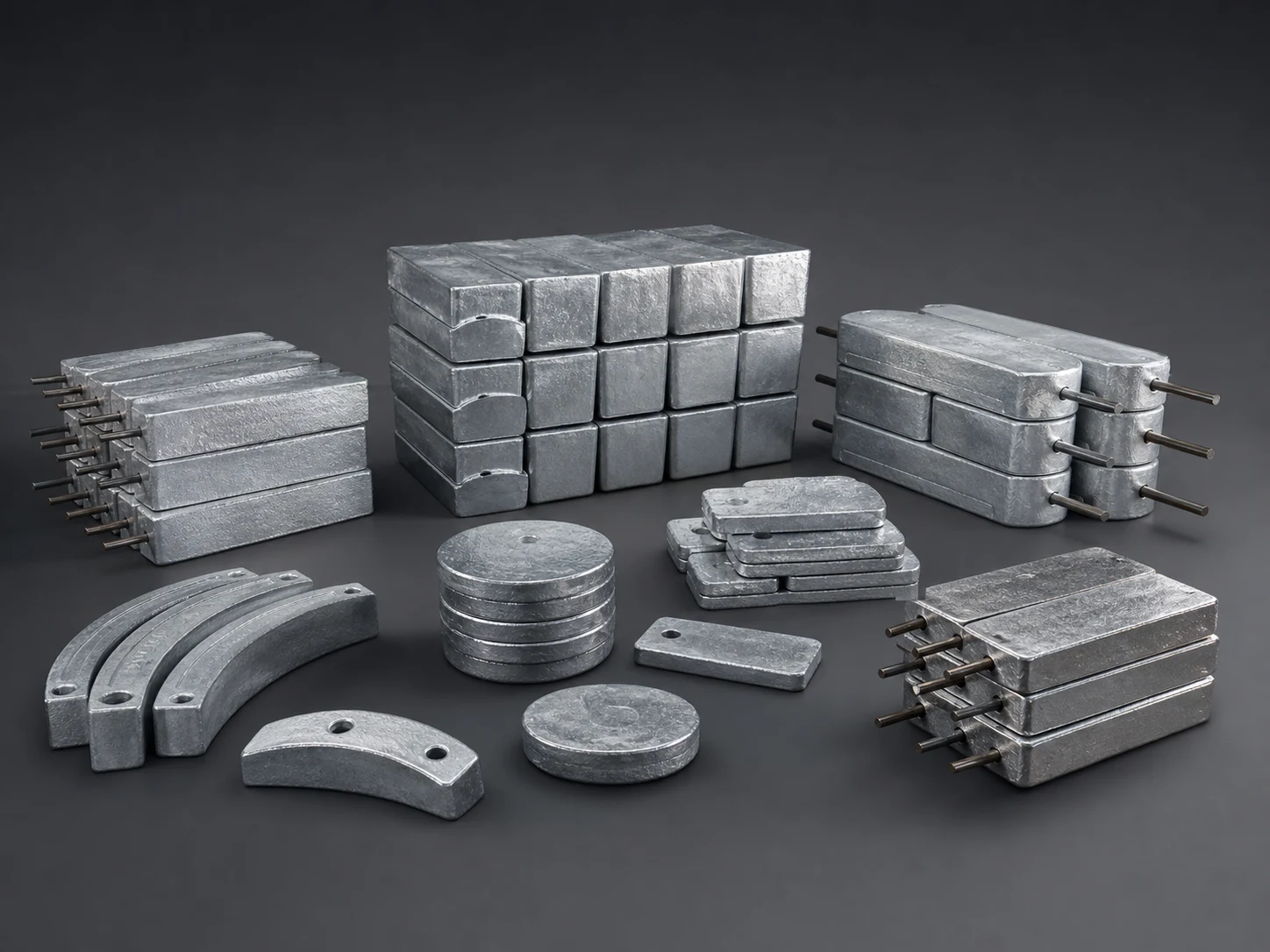
Geometry and insert remain item-specific
Alloy type, net mass and drawing identity stay visible in the compliance and packing registers.
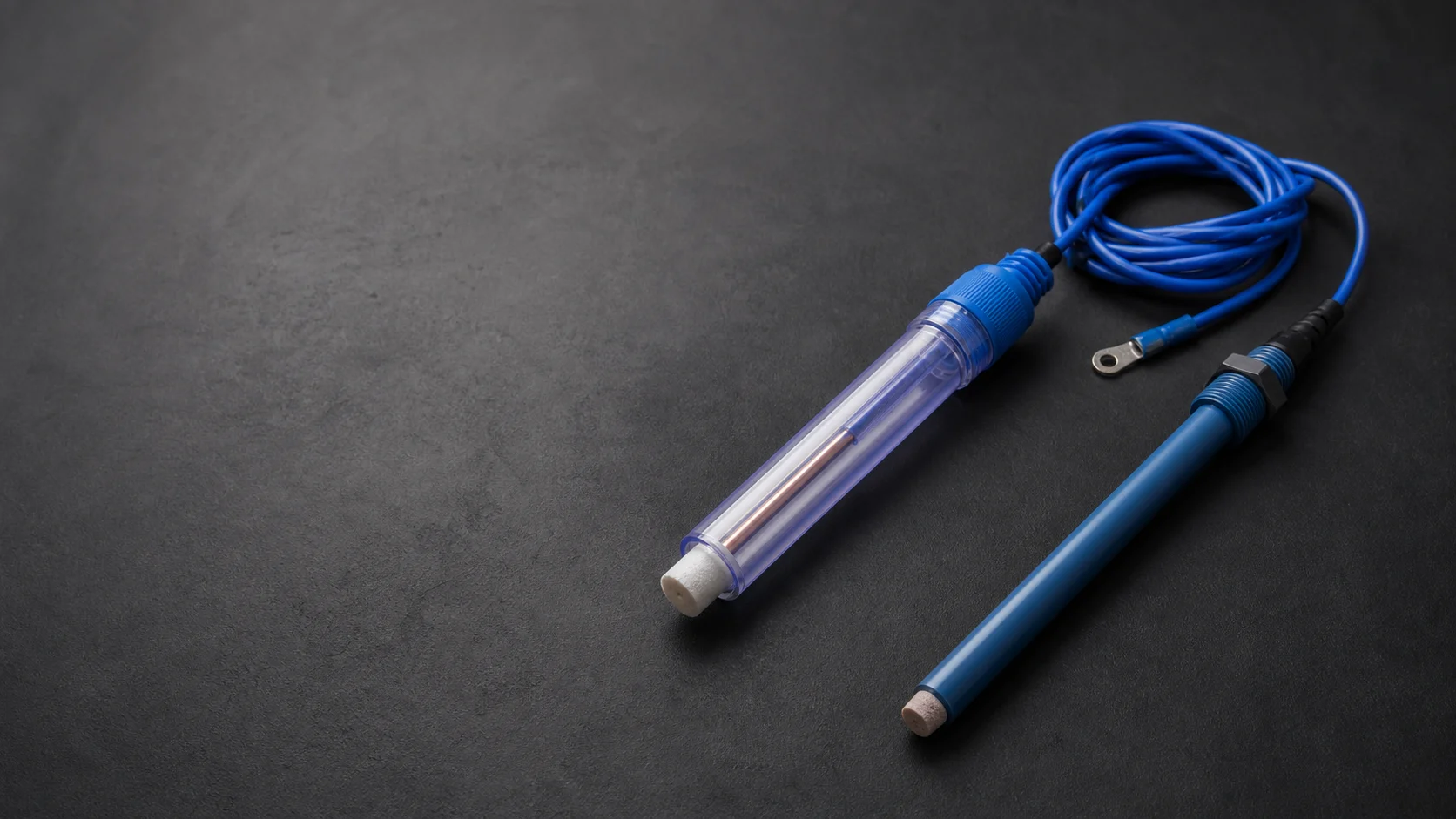
Reference and terminal data kept explicit
Chemistry, reference scale, lead and test-station terminal are reconciled as one monitoring point.
Product families
Configurations covered by this product range
Each configuration is released against its own datasheet, drawing or component schedule. Similar appearance does not make the technical definitions interchangeable.
Sacrificial-anode package
Magnesium, zinc and aluminum anodes with cables, backfill, mounts and project documentation.
Pipeline CP package
Anodes/groundbed items, reference electrodes, test stations, boxes, cable and connection materials.
Tank CP package
Tank-bottom anodes or grid materials, monitoring points, junction boxes, cable and installation accessories.
Monitoring and installation package
Reference electrodes, test stations, cable, splices, exothermic materials and identified field kits.
Applicable standards
Standards mapped to the part they actually control
Listing a standard is not a certification claim. The purchase specification must identify the required edition, clauses, tests and evidence. Project documents take precedence where they add or modify requirements.
| Standard and role | Scope | How it applies to this product |
|---|---|---|
| ISO 15589-1:2026CP system standard | Cathodic protection of on-land pipeline transportation systems, covering design, materials, equipment, installation and inspection. | The system designer's requirements for anodes, monitoring points, cabling, equipment and commissioning. It is not a standalone manufacturing certificate for every component. |
| NACE SP0169-2024Corrosion-control practice | Control of external corrosion on underground or submerged metallic piping systems. | CP criteria, design and installation context. Product configuration still follows the purchase specification and approved drawings. |
| ISO 9351:2025 / EN ISO 9351:2025Product and inspection standard | Cast aluminum-, magnesium- and zinc-based galvanic anodes for seawater, saline sediment and brackish water. | Chemistry, electrochemical properties, physical tolerances, testing and inspection when this standard is selected by the project. EN ISO 9351:2025 supersedes EN 12496:2013 in Europe. |
| DNV-RP-B401 (2021-05)Design and manufacturing practice | Cathodic protection design using aluminum- or zinc-based galvanic anodes, including manufacture and installation guidance. | Project design values, anode manufacture, inspection and installation requirements when DNV-RP-B401 forms part of the design basis. |
Edition review completed 22 July 2026. The edition named in the project requisition or purchase order remains the contractual basis.
Technical Data Sheet
Parameters buyers and engineers can verify
Numeric values are shown only where a current CathPro datasheet or recognized reference supports them. Custom assemblies use explicit project-defined fields instead of invented catalogue values.
MTO compliance matrix
This is the core technical datasheet for an integrated package. One row remains traceable from review through release and packing.
| Matrix field | What it records | Control purpose |
|---|---|---|
| MTO identity | Line number, item code, description, unit and quantity | Preserves buyer scope |
| Technical basis | Specification clause, standard/edition, datasheet and drawing revision | Defines compliance |
| Offered item | Manufacturer/model, configuration and key parameters | Makes the proposed supply explicit |
| Compliance status | Comply, clarification, deviation, exclusion or approved alternative | Prevents silent substitutions |
| Inspection | ITP activity, certificate/report and witness/hold requirement | Links evidence to the item |
| Delivery | Required date, package number, shipping mark and destination area | Maintains logistics traceability |
Interface-control datasheet
Cross-item checks prevent individually correct parts from failing when assembled at site.
| Interface | Parameters compared | Output |
|---|---|---|
| Anode to cable | Core/lead connection, conductor, insulation, length and termination | Approved anode assembly definition |
| Cable to terminal | Conductor size/class, lug, stud, terminal range and gland OD | Compatibility schedule |
| Electrode to station | Electrode type, lead length, polarity, termination and terminal ID | Monitoring-point schedule |
| Box to field cables | Cable count/OD, entry direction, glands, bend space and labels | GA and gland schedule |
| Exothermic connection | Conductor, substrate, mold, charge and accessories | Approved connection set |
| Packing to installation | Area/system tags, item sequence, loose accessories and document set | Installation-oriented packing list |
Vendor document register
Document requirements are assigned before production so records are created at the correct stage rather than reconstructed after shipment.
| Document class | Typical content | Status control |
|---|---|---|
| Design documents | Datasheets, GA drawings, schematics, terminal schedules and calculations if in scope | Submitted/approved/as-built revision |
| Material records | Chemistry, MTC/CoC and component certificates as applicable | Linked to item and batch |
| Inspection records | ITP, dimensional, weight, electrical, coating and test reports | Reviewed/released with item |
| Product information | Installation, storage, handling and manufacturer datasheets | Approved issue included |
| Packing/shipping | Packing list, package tags, net/gross mass and photos if required | Linked to shipment package |
| Final data book | Indexed approved/as-built documents and release records | Final revision and transmittal status |
Manufacturing control
From approved data to an inspectable product
The process is organized around released drawings, material identity, controlled interfaces and inspection records. No unapproved change is treated as equivalent by default.
Scope normalization
Convert MTO, requisition, drawings and specifications into one controlled line-item register without rewriting the buyer's identity fields.
Technical mapping
Assign standards, drawings, datasheets, inspection and document requirements to each line.
Clarification closure
Resolve missing dimensions, interfaces, ratings and deviations before order release or identify them as controlled open points.
Item-specific supply release
Release each item against its approved data and required traceability.
Interface and progress control
Check related item compatibility and monitor inspection/document status against the package schedule.
Inspection and consolidation
Release each item through its ITP, then verify quantity, identification and completeness during consolidation.
Final packing and data book
Organize packages and records by project coding so physical items and documents can be reconciled at receipt.
Inspection and test plan
Checks tied to a stated acceptance basis
Inspection is useful only when the method, acceptance document and product identity are recorded together.
| Inspection item | Method or record | Acceptance basis |
|---|---|---|
| Line-item compliance | Offered item against description, standard, drawing and approved clarification | Compliance matrix |
| Interface compatibility | Cable/terminal/gland, anode/cable, electrode/station and connection-system checks | Interface schedule |
| Item inspection | Product-specific chemistry, dimensions, electrical, visual or document checks | Applicable ITP/datasheet |
| Quantity and identification | MTO quantity, tags, batch/serial and package allocation | Packing and release list |
| Document completeness | Approved/as-built drawings, certificates, reports and product information | Vendor document register |
Application range
Where this product family is used
- Oil and gas pipeline projects
- Water transmission projects
- Tank farms and terminals
- Marine and offshore projects
- EPC procurement packages
- Plant maintenance shutdowns
- Utility infrastructure
- Replacement material programs
Engineering selection notes
Points that should remain visible in technical review
- A package does not have one universal product standard; applicable requirements flow down to each line item and interface.
- Equivalent products should remain separate alternatives until the buyer approves the deviation or substitution.
- Document requirements need to be fixed before manufacturing because many records depend on production-stage sampling or witness points.
Documentation
Evidence that follows the manufactured item
The final document set is defined by the order and ITP. Availability depends on the product, inspection scope and approved vendor-data requirements.
Controlled MTO/compliance schedule
Single index for requested, offered and final supplied item data.
Approved datasheets and drawings
Item-specific technical definition, revisions and accepted clarifications.
Inspection release package
ITPs, certificates and reports tied to item and batch identity.
Interface schedule
Cross-product compatibility decisions for cables, terminals, glands, joints and assemblies.
Packing list and final data book
Physical package identity reconciled with the approved document index.
Technical questions
Common specification points
Answers focus on product definition and evidence, not on sales instructions.
What makes a CP materials package technically controlled?
Every MTO line is tied to its specification, drawing, offered item, compliance status, inspection requirement, documents and packing identity in one register.
Can one standard cover the complete package?
No. A system standard can provide the design basis, but alloy, enclosure, conductor and connection requirements flow down through different product and component standards.
How are substitutions handled?
Any proposed alternative should identify the affected line, differences, supporting data and approval status. It should not silently replace the compliant base item.
Why is interface control necessary?
Products can each meet their own datasheets and still fail to connect at site. Cable OD, lug/stud, gland, terminal, polarity, mounting and accessory interfaces must be cross-checked.