Cu/CuSO4, Ag/AgCl, zinc or specified alternative.
Permanent cathodic protection monitoring
Long-Life and Permanent Reference Electrodes
A permanent reference electrode provides a repeatable potential reference at a defined monitoring location. The term long-life describes the intended service category, but no service-life figure is valid without a stated chemistry, environment, construction, installation and acceptance basis.
CathPro supplies project-selected Cu/CuSO4, Ag/AgCl, zinc and other reference systems through defined product datasheets. Final selection belongs to the CP design and must account for chloride, temperature, soil or water chemistry, contamination and maintenance access.
Send the chemistry, application, cable and specification directly. No form required. Email: sales@cathprocp.com
Supply identity: Project-sourced from qualified manufacturers; supplied and documented by CathProStandards mapped by scopeData fields stated explicitly
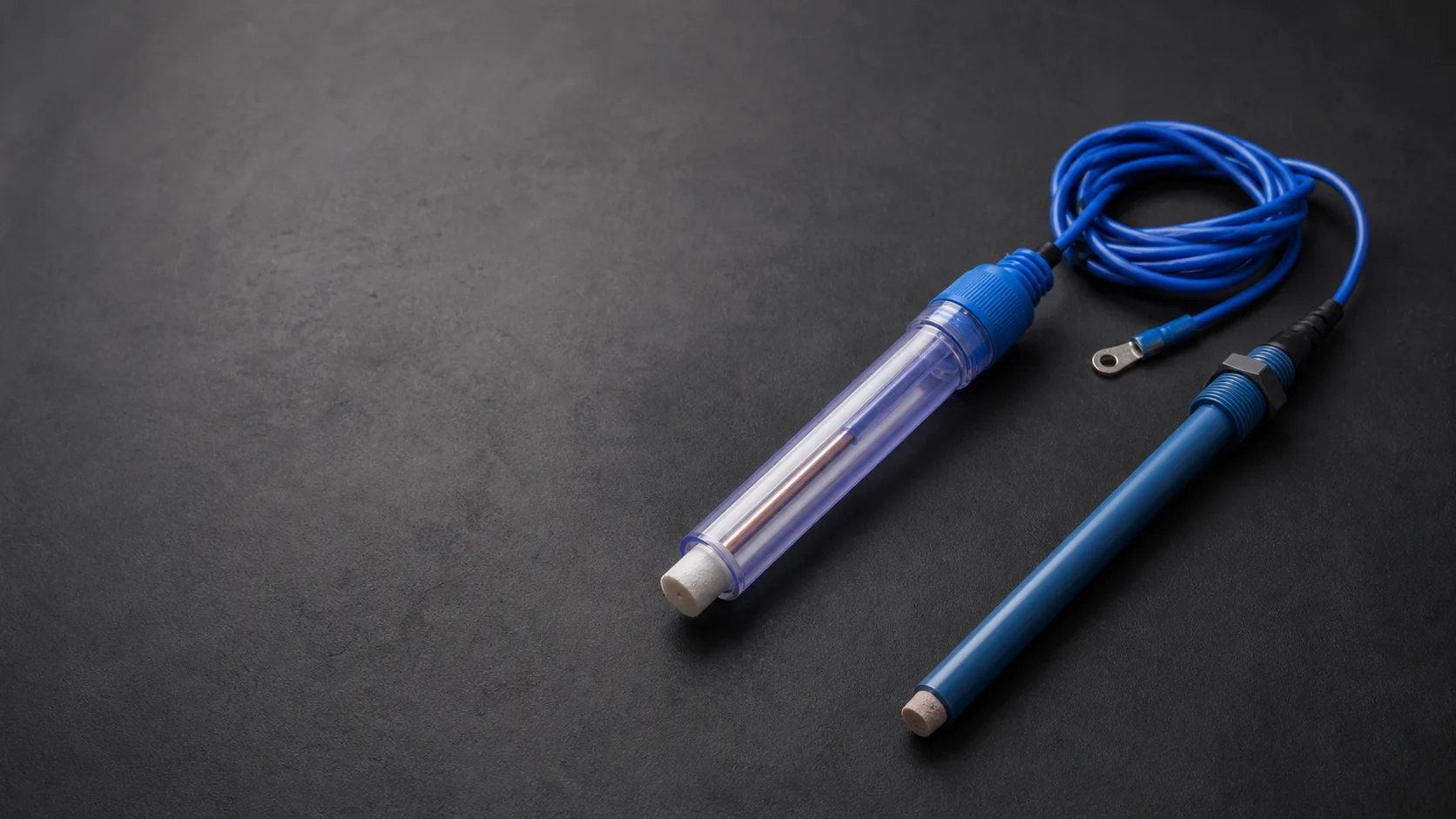
Construction and verification differ by service category.
Potential basis, cable, seal and storage are recorded.
Product overview
The technical definition comes before the catalogue name.
A controlled product page separates the component's function, product construction and acceptance data from the wider cathodic protection design. This prevents a familiar name from hiding missing material, interface or inspection requirements.
- Primary function
- Provide a defined electrochemical reference for CP potential measurements.
- Typical services
- Buried pipelines, tank bottoms, water systems, marine structures and monitoring stations.
- Selection inputs
- Electrolyte, chloride, temperature, contamination, installation access, design life and measurement standard.
- Supply boundary
- Reference cell, cable, protective housing and termination as defined in the product datasheet.
Product construction
What the finished product contains
Reference stability depends on the complete electrochemical and mechanical assembly, not only on the name of the internal chemistry.
Reference element
Chemistry and electrode material selected for the service electrolyte and project measurement basis.
Internal electrolyte
Composition and state controlled by the selected design; no cross-chemistry equivalence is assumed.
Porous or ionic interface
Provides ionic contact with the surrounding electrolyte while controlling leakage and contamination.
Housing
Mechanically protects the cell and defines installation, conditioning and orientation requirements.
Cable and seal
Low-resistance conductor, insulation and environmental seal selected for burial, immersion or enclosure service.
Identification
Model, chemistry, cable, batch/serial and verification record remain linked through packing and installation.
Premium product studies
Products, configurations and critical interfaces
Premium product studies present representative permanent reference-electrode bodies, sensing interfaces and leads. They do not imply one universal lifetime; model-specific construction, potential verification and service assumptions remain controlled.
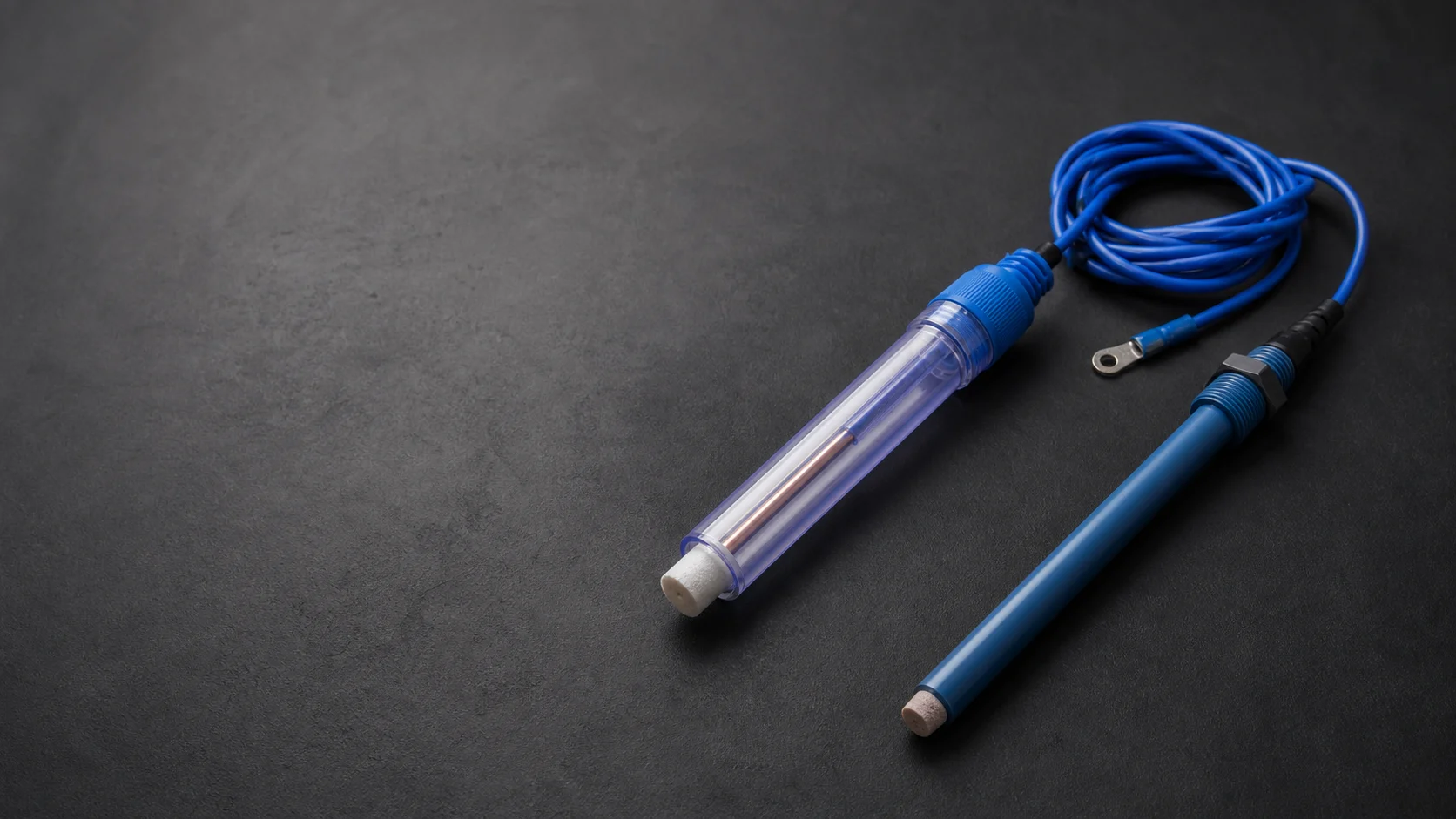
Chemistry and service environment selected together
Cu/CuSO4, Ag/AgCl and zinc systems use different reference scales and compatibility conditions.
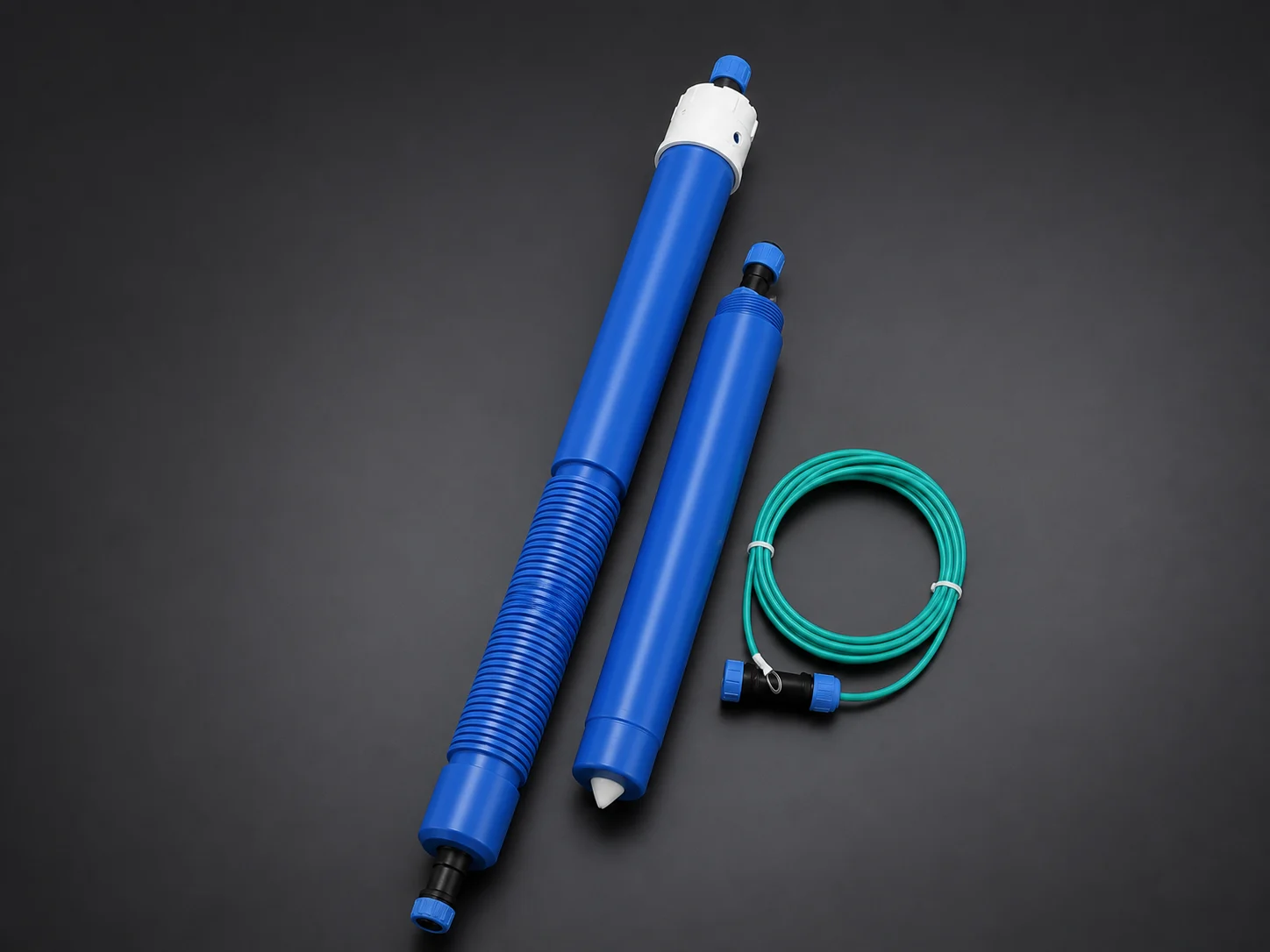
Mechanical protection adapted to installation
Housing, porous interface, electrolyte inventory, cable exit and protection are defined for the selected model.
Portable and permanent units remain separate
Conditioning, handling, replacement and verification requirements differ even where the same reference chemistry is used.
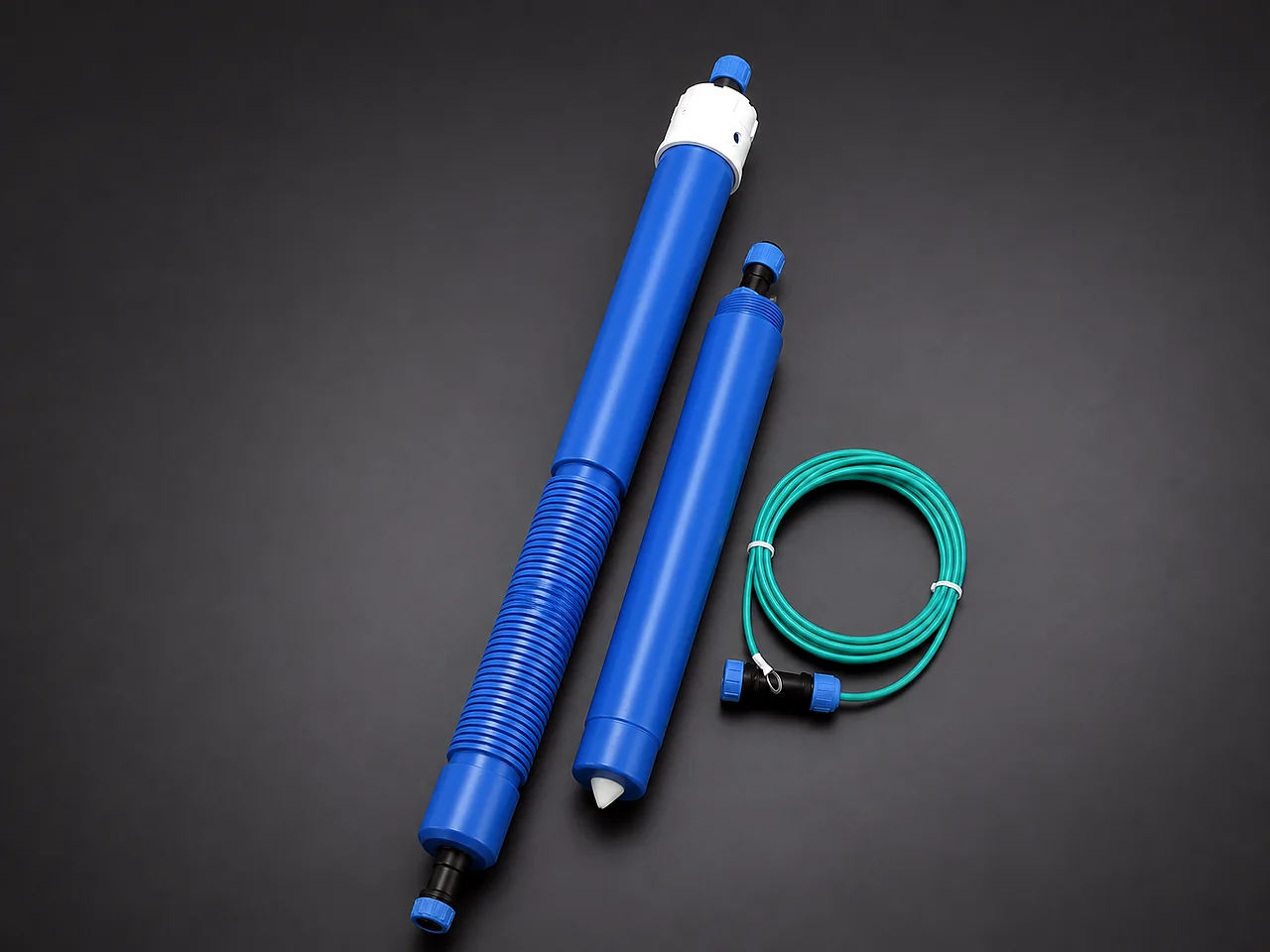
Lead and sensing body supplied under one identity
Potential comparison, cable continuity, sealing and final marking follow the approved ITP.
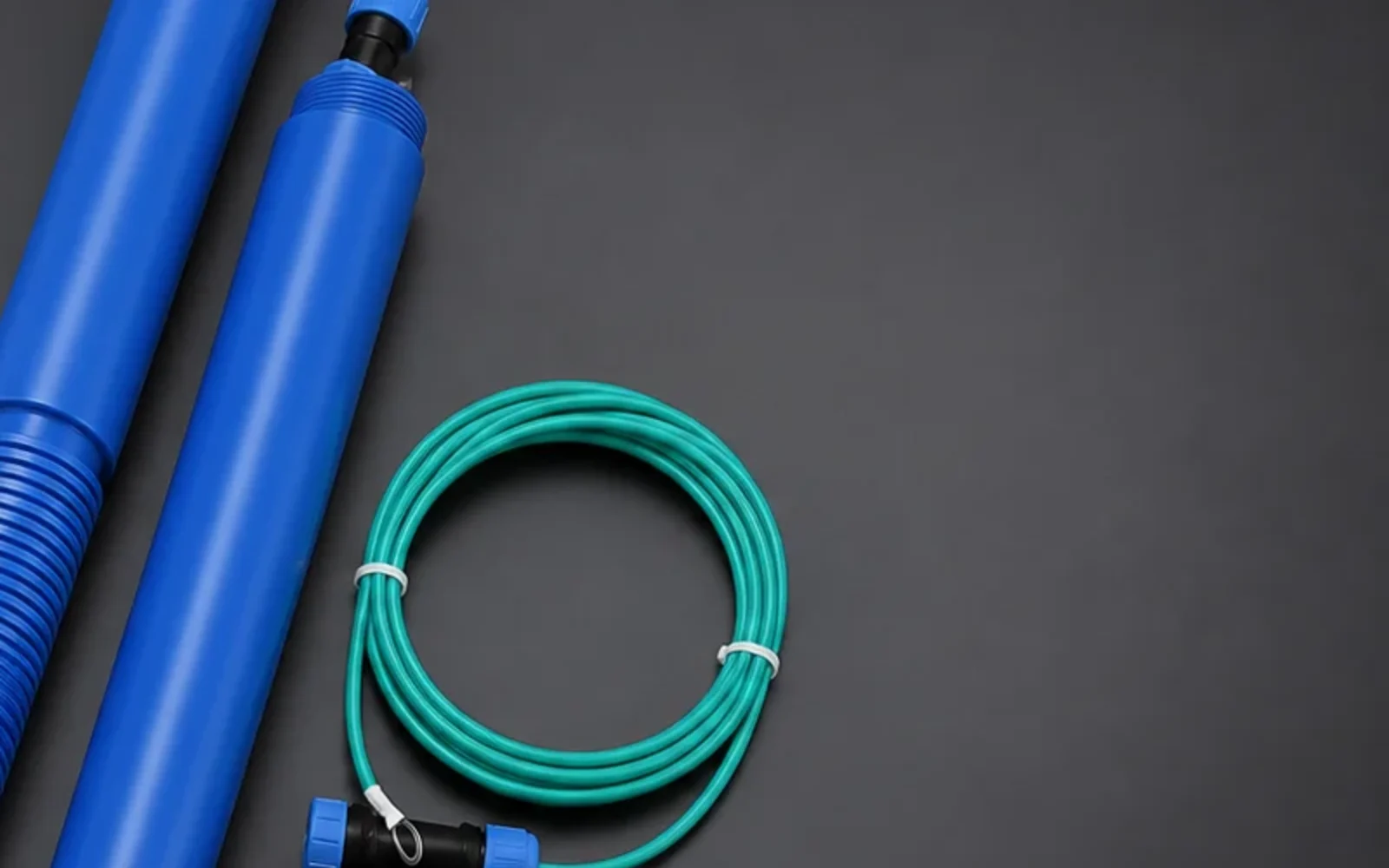
Housing and cable presented at inspection scale
Threaded sections, cable exit and protective body are checked against the approved model drawing.
Product families
Configurations covered by this product range
Each configuration is released against its own datasheet, drawing or component schedule. Similar appearance does not make the technical definitions interchangeable.
Permanent buried Cu/CuSO4
For chloride-free soil service where the CP design selects a copper/copper-sulfate reference system.
Portable Cu/CuSO4
Field-survey electrode with inspection, conditioning and maintenance requirements distinct from permanent burial.
Ag/AgCl reference system
Selected for seawater or chloride-bearing environments according to the project reference scale and construction.
Zinc reference system
Project-selected seawater or industrial monitoring reference where the design defines zinc potential basis and geometry.
Integrated monitoring assembly
Reference electrode combined with coupons, test station or tank-profile system under one approved interface schedule.
Applicable standards
Standards mapped to the part they actually control
Listing a standard is not a certification claim. The purchase specification must identify the required edition, clauses, tests and evidence. Project documents take precedence where they add or modify requirements.
| Standard and role | Scope | How it applies to this product |
|---|---|---|
| NACE TM0497-2022Measurement method | Field measurement techniques related to CP criteria on underground or submerged metallic piping. | Measurement arrangement, reference-electrode use and cautionary measures. It does not define a universal reference-electrode product construction. |
| ISO 15589-1:2026CP system standard | Cathodic protection of on-land pipeline transportation systems, covering design, materials, equipment, installation and inspection. | The system designer's requirements for anodes, monitoring points, cabling, equipment and commissioning. It is not a standalone manufacturing certificate for every component. |
| ISO 12473:2017Marine CP principles | General principles and protection criteria for cathodic protection in seawater, brackish water and marine mud. | Provides application context for marine reference electrodes and monitoring. Product chemistry, construction and verification remain project-defined. |
| ISO 22426:2020Coupon assessment standard | Design, installation, positioning, sizing, use and maintenance of coupons used to assess cathodic-protection effectiveness under normal, AC-interference and DC-interference conditions. | Controls the monitoring method and coupon application. It does not replace the project drawing, cable schedule, exposed-area definition or acceptance inspection for the supplied assembly. |
Edition review completed 22 July 2026. The edition named in the project requisition or purchase order remains the contractual basis.
Technical Data Sheet
Parameters buyers and engineers can verify
Numeric values are shown only where a current CathPro datasheet or recognized reference supports them. Custom assemblies use explicit project-defined fields instead of invented catalogue values.
Reference-electrode technical data
Values are model-specific. The RFQ and approved datasheet should state every field below instead of using a generic long-life claim.
| Data field | Definition | Evidence |
|---|---|---|
| Reference chemistry | Element/electrolyte system and potential reference scale | Approved datasheet |
| Potential range or tolerance | Value, reference basis, temperature and test condition | Verification report when specified |
| Service electrolyte | Soil, fresh water, seawater, concrete or specified process environment | Application review |
| Temperature range | Operating and storage range for the selected model | Manufacturer datasheet |
| Cable | Conductor, insulation, color, length and end preparation | Cable schedule and continuity record |
| Housing/interface | Body material, dimensions, porous interface and protection | GA/detail drawing |
| Conditioning/storage | Pre-installation, shelf and transport requirements | Handling instruction |
Selection matrix
This matrix is a scope guide, not a substitute for CP engineering review.
| Environment | Reference families to evaluate | Review points |
|---|---|---|
| Buried soil | Permanent Cu/CuSO4 or project-selected alternative | Chloride, dryness, contamination, installation access |
| Fresh water | Cu/CuSO4, Ag/AgCl or project-selected system | Water chemistry, temperature, immersion method |
| Seawater | Ag/AgCl or zinc reference system | Reference scale, salinity, biofouling, depth |
| Tank bottom | Permanent reference and profile arrangements | Placement, cable routing, access, replacement strategy |
| Coupon test point | Separate or integrated reference electrode | Coupon geometry, IR-drop control, terminal schematic |
Service-life statement evidence
A service-life value is publishable only when its assumptions and limitations are documented for the selected model.
| Evidence field | What must be defined | Why it matters |
|---|---|---|
| Reference model | Chemistry, electrolyte inventory, housing and interface | Different constructions age differently |
| Environment | Electrolyte, chloride, temperature, contaminants and wet/dry exposure | Site conditions affect stability and consumption |
| Installation | Location, orientation, protection, conditioning and access | Incorrect installation can invalidate model data |
| Acceptance | Initial potential comparison, tolerance and test conditions | Creates a traceable installation baseline |
| Maintenance | Inspection/check interval and replacement criterion | Separates intended category from an unconditional guarantee |
Technical files
Published product datasheets
Permanent and long-life reference electrodes datasheetControlled public summary for project-specific permanent reference-electrode selection and verification.Sourcing and verification control
From approved data to an inspectable product
Complete products are project-sourced from qualified manufacturers against the approved model, datasheet and inspection scope. CathPro controls supplier documentation and agreed verification without claiming manufacture.
Requirement review
Confirm chemistry, housing, interface, cable and verification basis before supplier selection.
Qualified-source selection
Select a qualified manufacturer and model whose documented construction matches the approved datasheet.
Supplier-document review
Review reference chemistry, housing, interface, cable, storage and verification data included in the agreed scope.
Incoming inspection
Check model identity, housing, interface, cable, sealing, marking and packaging condition.
Agreed verification
Perform model-specific potential, continuity, visual and identification checks included in the ITP.
Document release and packing
Match supplier and CathPro inspection records to the supplied item, then apply required export packing.
Inspection and test plan
Checks tied to a stated acceptance basis
Inspection is useful only when the method, acceptance document and product identity are recorded together.
| Inspection item | Method or record | Acceptance basis |
|---|---|---|
| Identity and chemistry | Component and assembly record | Approved model/datasheet |
| Potential verification | Specified comparison method and conditions | Approved acceptance range |
| Cable and continuity | Cable schedule and electrical continuity | Approved drawing/ITP |
| Housing and interface | Dimensions and visual inspection | GA/detail drawing |
| Marking/packing | Model, batch/serial and storage-label check | Packing and identification plan |
Application range
Where this product family is used
- Buried pipeline monitoring
- Tank-bottom monitoring
- Fresh-water structures
- Marine and offshore structures
- Coupon test stations
- Permanent potential monitoring
- Commissioning and maintenance
- Remote monitoring interfaces
Engineering selection notes
Points that should remain visible in technical review
- Reference potentials must always be reported with the reference chemistry and temperature/test condition.
- A portable electrode and a permanent buried electrode should not be treated as interchangeable merely because both use Cu/CuSO4 chemistry.
- Service-life statements require a model-specific basis and actual environmental assumptions; this page intentionally makes no universal life guarantee.
Documentation
Evidence that follows the supplied item
The final document set is defined by the order and ITP. Availability depends on the product, inspection scope and approved vendor-data requirements.
Model datasheet
Chemistry, reference scale, potential basis, environment and temperature scope.
GA/detail drawing
Housing, sensing interface, cable exit and installation dimensions.
Verification record
Potential comparison and other model-specific acceptance checks when specified.
Cable/continuity record
Conductor identity, length, termination and electrical path.
Handling instruction
Conditioning, storage, installation and damage-prevention guidance.
Technical questions
Common specification points
Answers focus on product definition and evidence, not on sales instructions.
Which reference chemistry should be used?
The CP designer selects chemistry from electrolyte, chloride, temperature, contamination, reference scale and installation requirements.
Does long-life mean a guaranteed number of years?
No universal number applies. A service-life statement must be tied to a defined model, environment, installation and acceptance basis.
What verification should be requested?
Specify the comparison method, reference scale, temperature/conditioning, acceptance range, cable continuity and visual/identification checks.
Can the reference electrode be supplied with a coupon?
Yes when the complete integrated assembly, coupon areas, reference chemistry, leads and terminal schedule are defined on approved documents.